Backend & Databases
Node.js, SQL, MongoDB and API design, with an emphasis on the failure modes you only meet in production.
 Backend & Databases8 min read
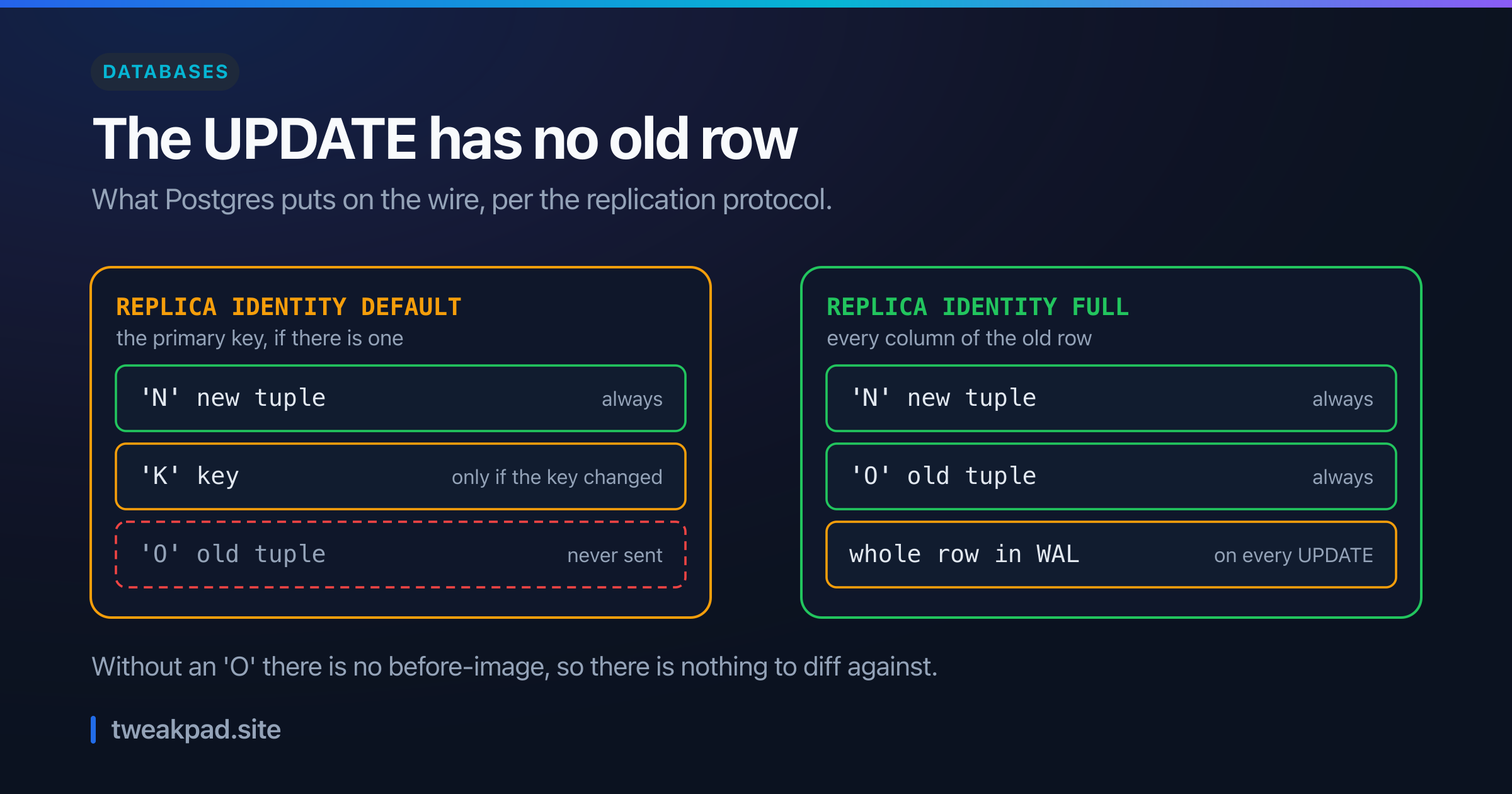
Postgres Logical Replication Does Not Send You the Old Row
Logical replication sends the new row and, by default, no before-image at all. What Postgres puts in an UPDATE, and what it leaves out.
The TweakPad Team
 Backend & Databases8 min read
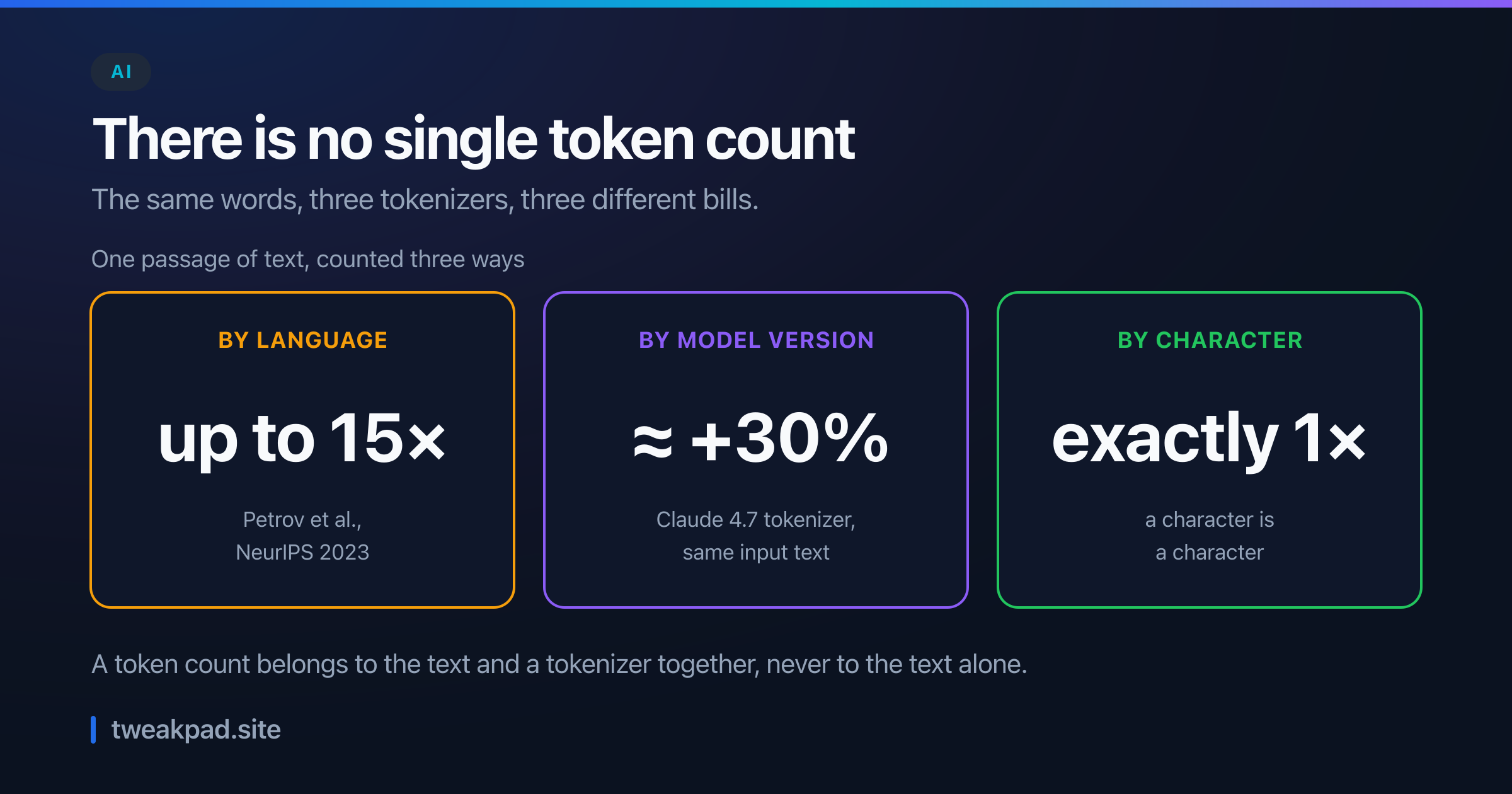
Your Token Count Is Not a Property of Your Text
A token count depends on the language, the model and the content. The same text varies 15x by language and 30% between model versions.
The TweakPad Team
 Backend & Databases8 min read
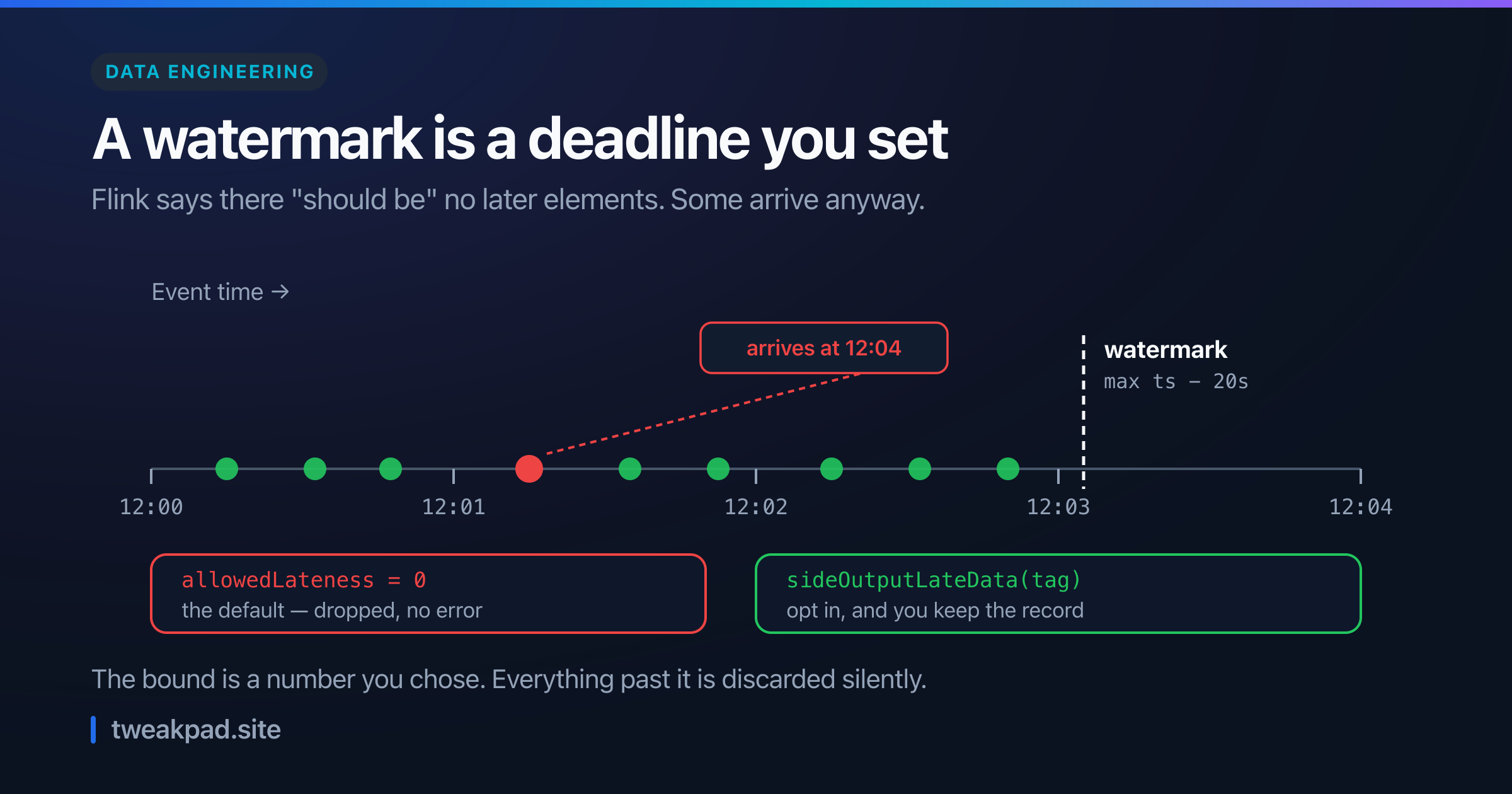
Late Data Is Dropped by Default, and Nothing Tells You
A watermark declares that late data should not arrive. Some does, and Flink drops it by default with no error. What the docs really say.
The TweakPad Team
 Backend & Databases8 min read
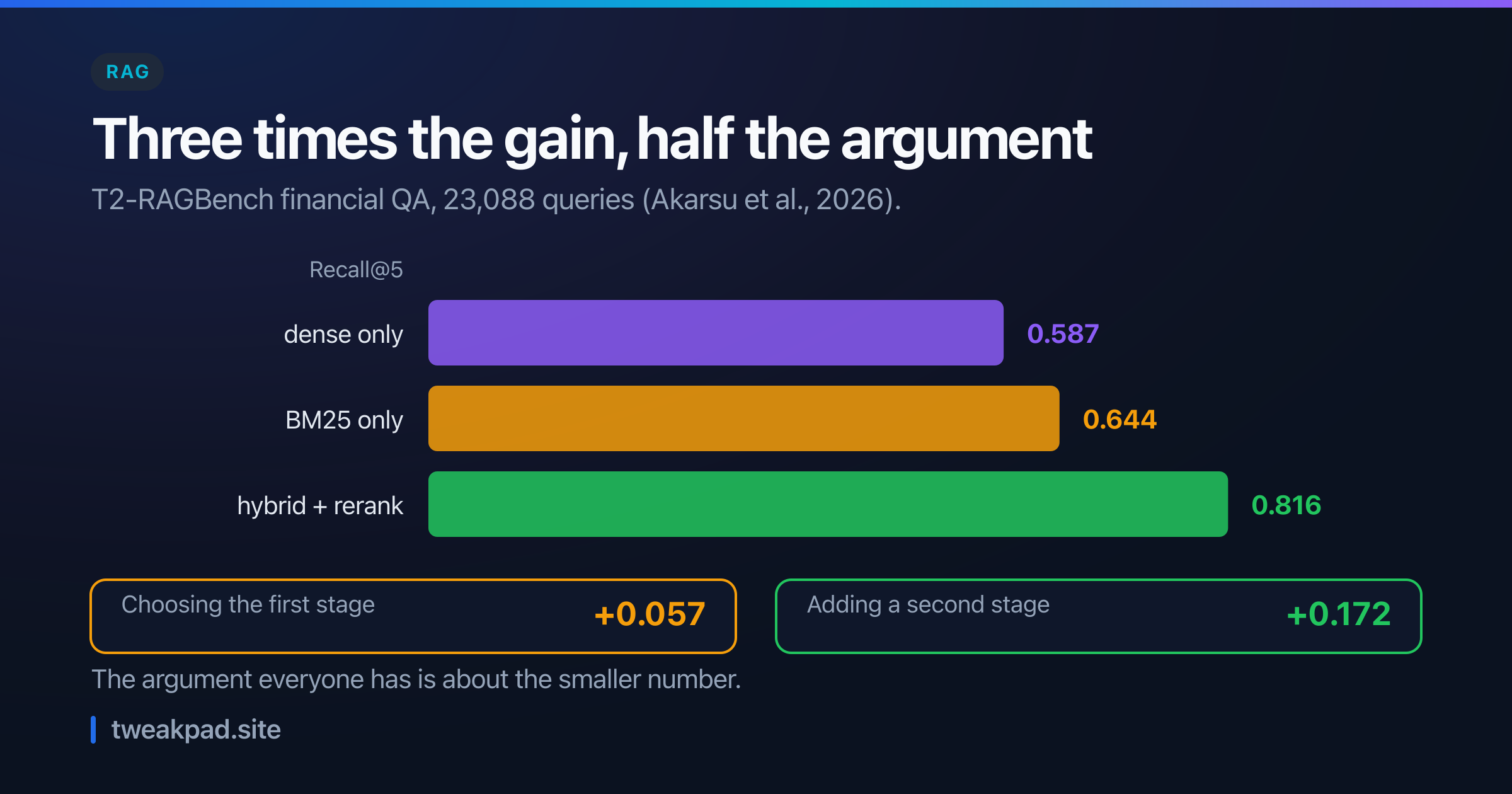
The BM25 Versus Embeddings Argument Measures the Wrong Gap
Two benchmarks agree across five years. Choosing BM25 or embeddings shifts recall a little. A reranking stage shifts it three times more.
The TweakPad Team
 Backend & Databases8 min read
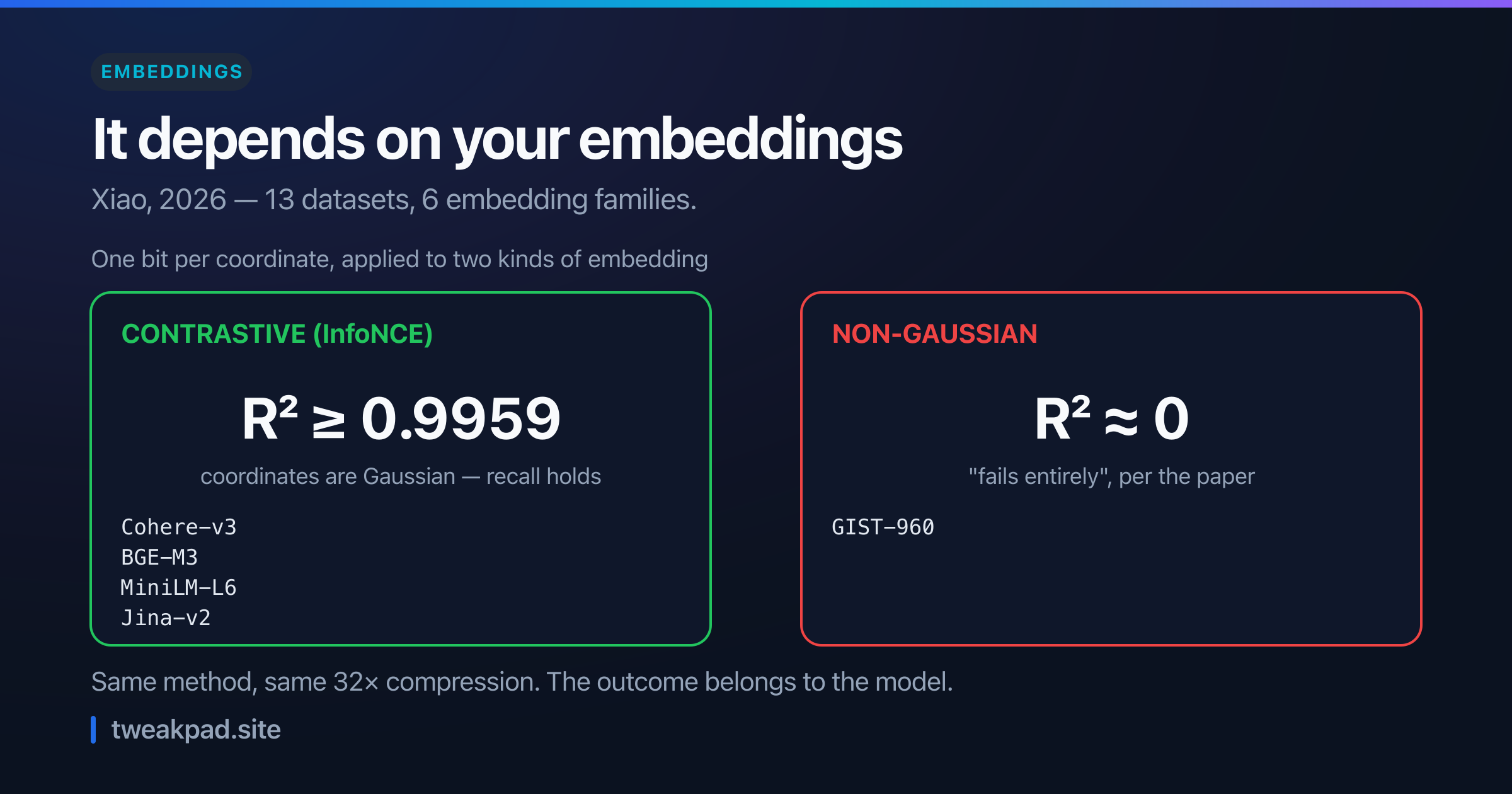
Binary Quantization Works on Your Embeddings, or It Does Not
Binary quantization keeps recall on contrastive embeddings and fails on others. The outcome belongs to your model, not to the method.
The TweakPad Team
 Backend & Databases8 min read
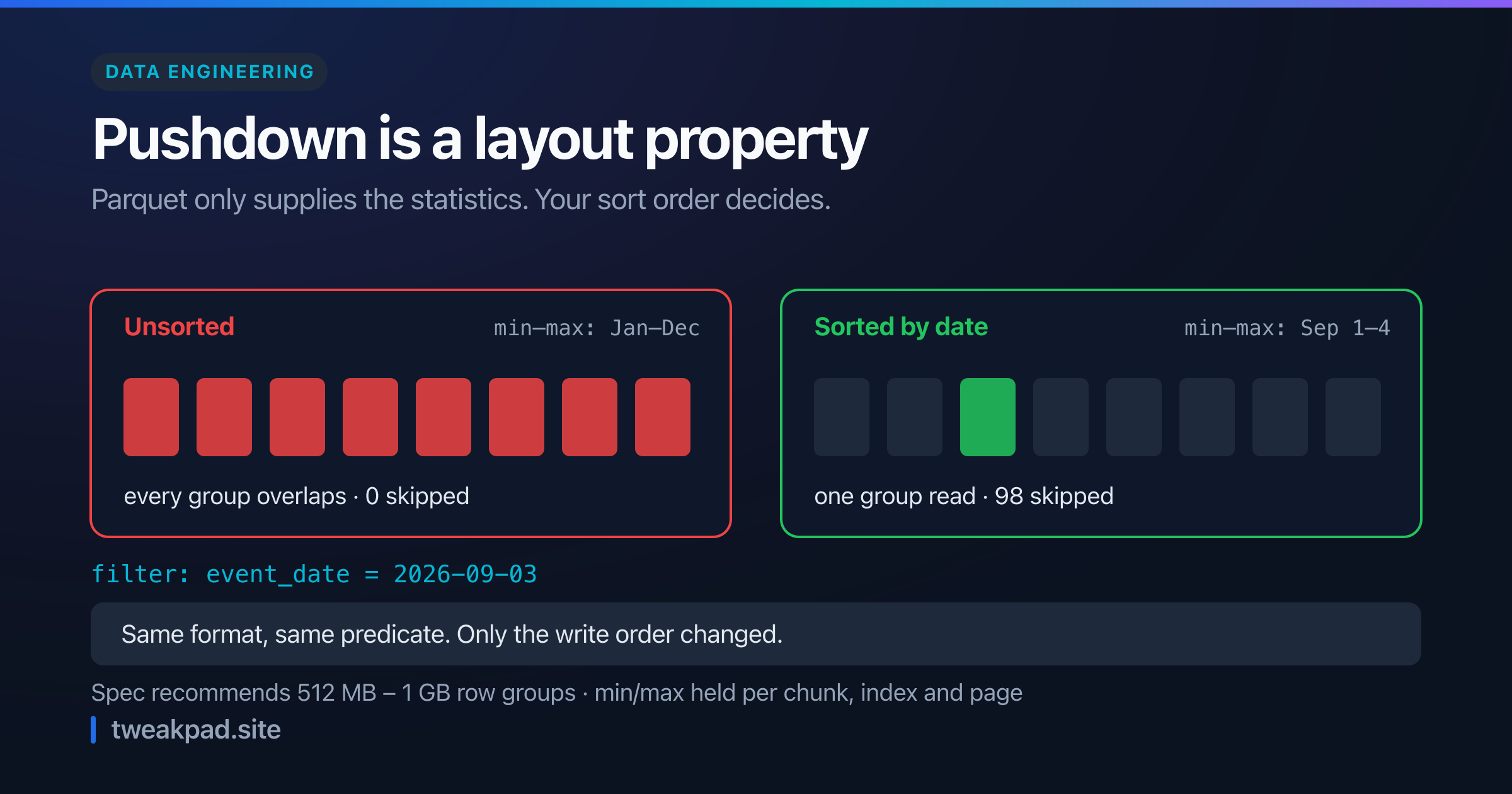
Parquet Row Groups Decide Whether Your Filters Skip Anything
Parquet row groups only skip data when the layout cooperates. Why unsorted writes make min/max statistics useless, and how to fix it.
The TweakPad Team
 Backend & Databases9 min read
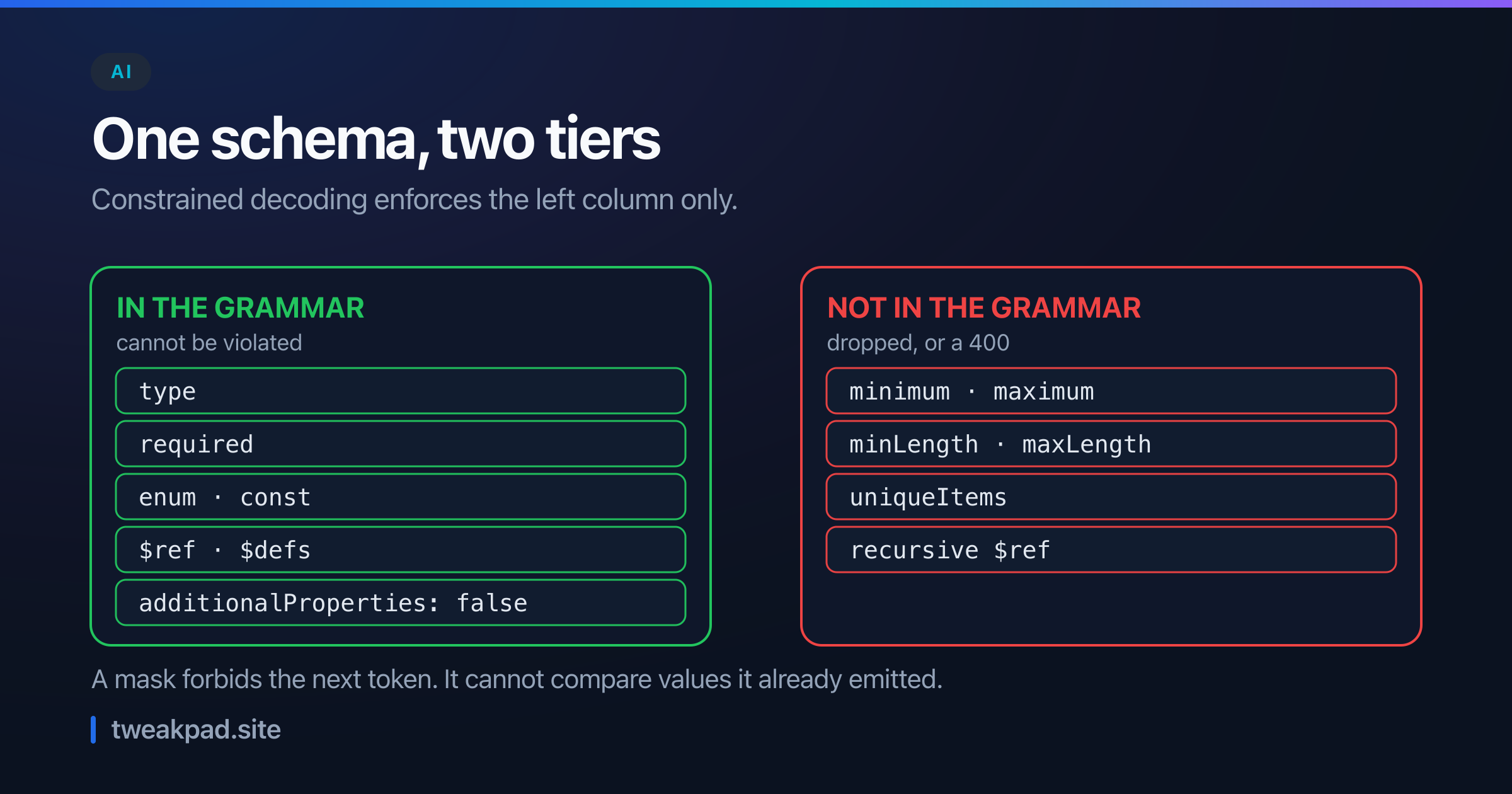
Structured Outputs Guarantee a Grammar, Not Your Schema
Structured outputs constrain replies to a grammar, and several JSON Schema keywords never reach it. What the guarantee really covers.
The TweakPad Team
 Backend & Databases9 min read
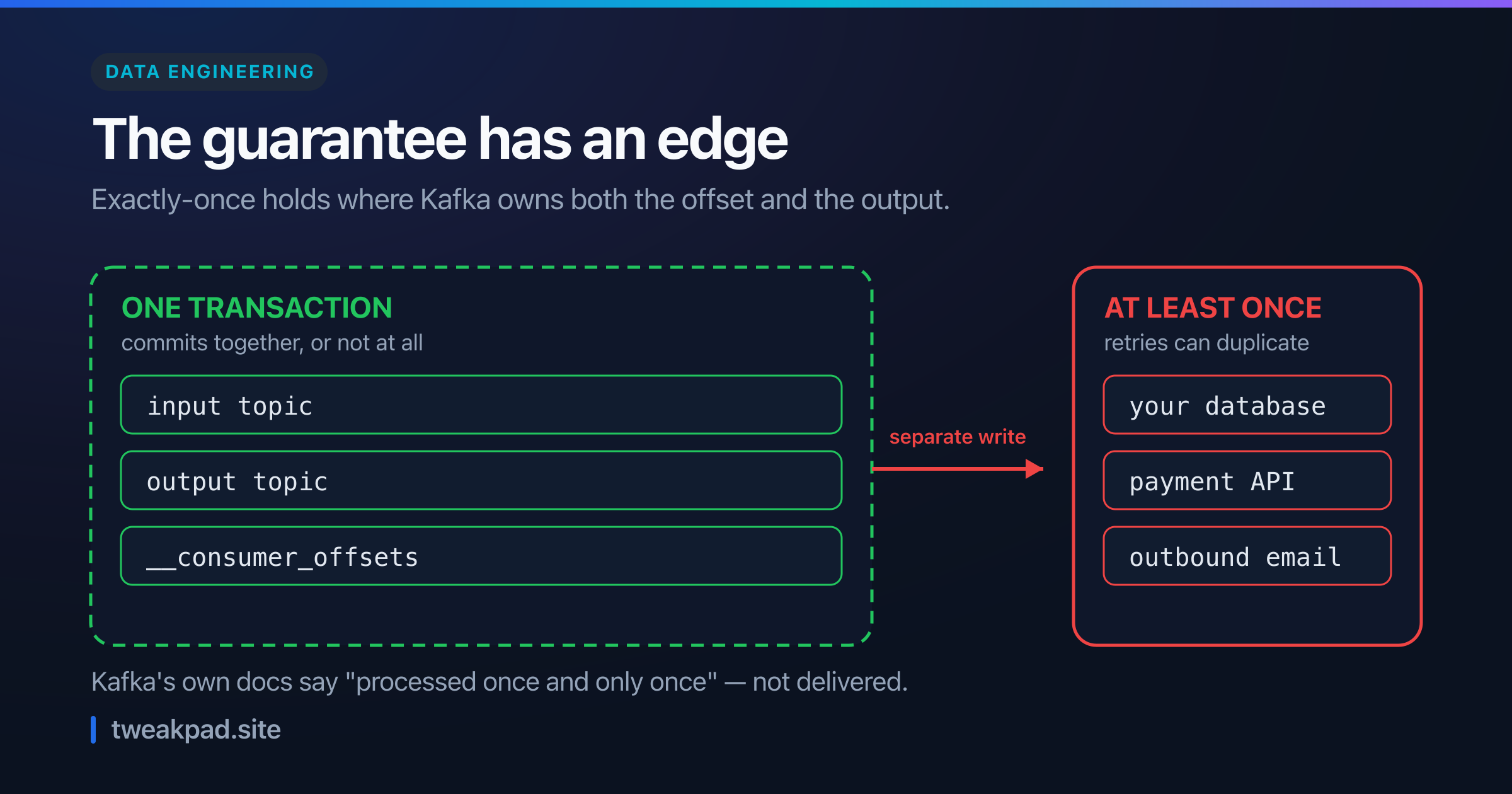
Exactly-Once Semantics Stop Where Kafka Stops
Exactly-once semantics cover a read-process-write loop inside Kafka. Your database write sits outside it. What the guarantee really says.
The TweakPad Team
 Backend & Databases8 min read
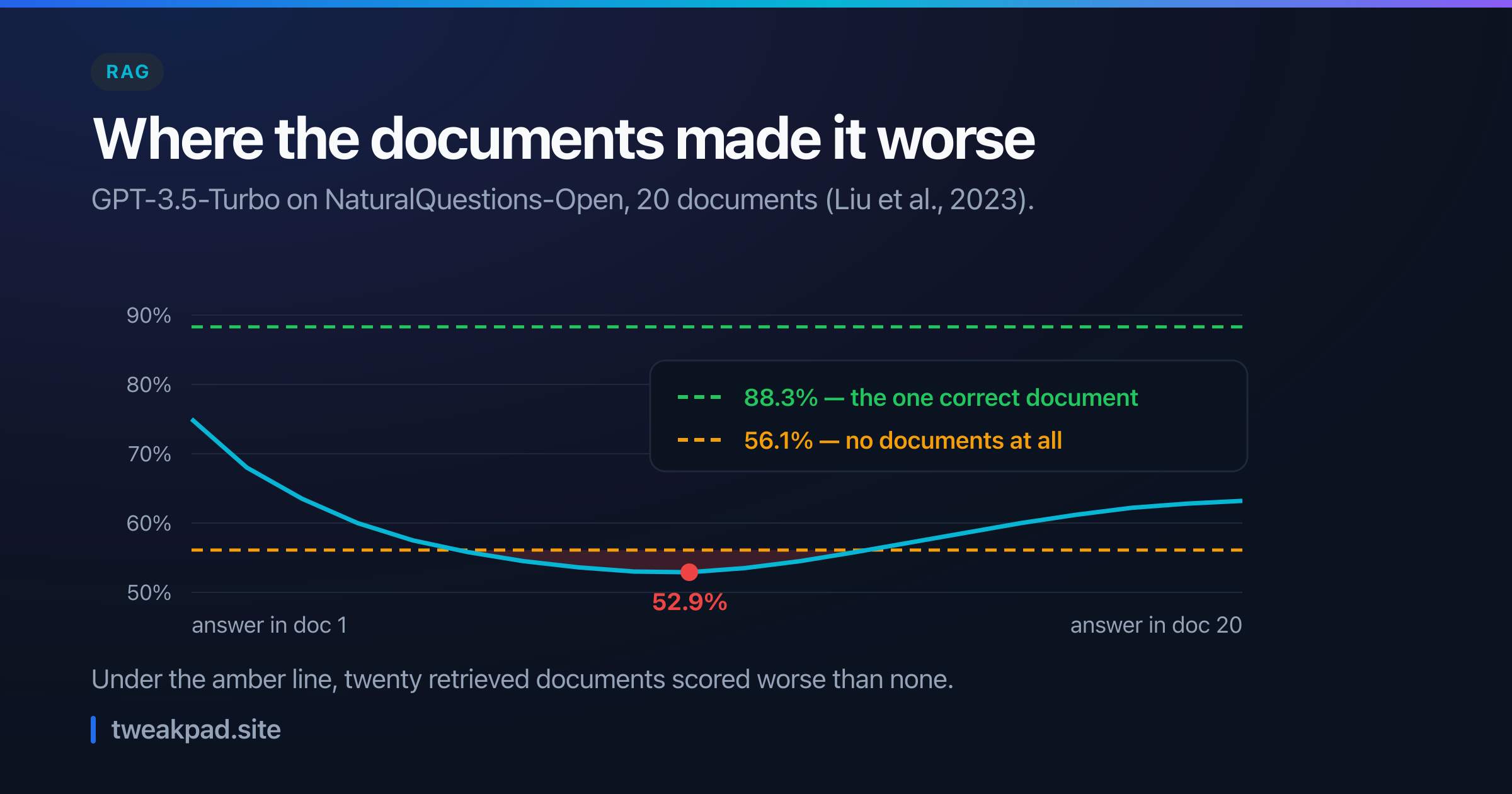
Lost in the Middle Is an Argument for Retrieving Less
Lost in the middle is usually read as a reordering problem. The paper's own numbers argue harder for retrieving fewer documents.
The TweakPad Team
 Backend & Databases8 min read
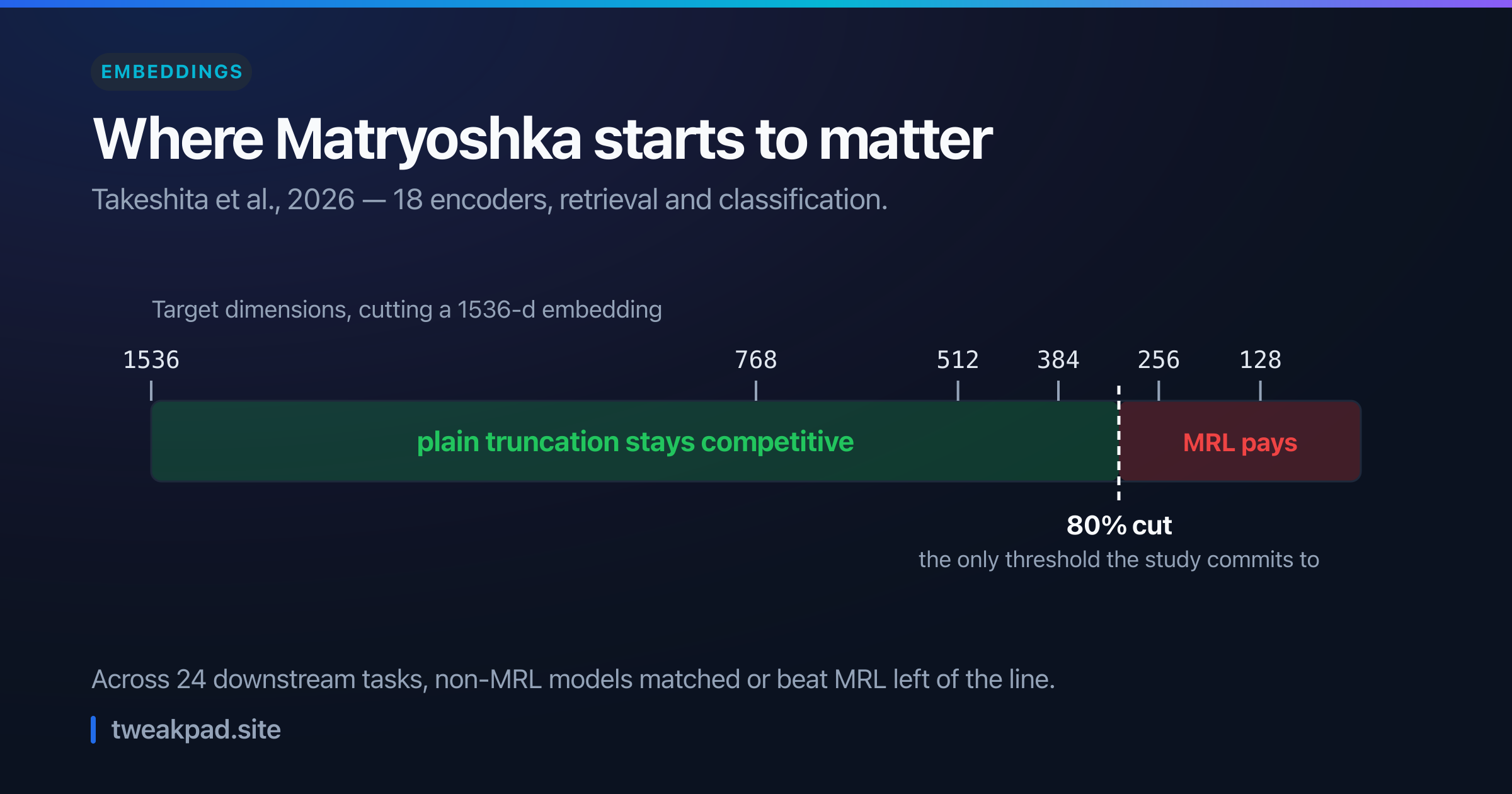
Truncating Embeddings Works Without Matryoshka, Up to a Point
Truncating embeddings supposedly needs Matryoshka training. A 2026 study across 24 tasks found plain truncation holds until you cut 80%.
The TweakPad Team
 Backend & Databases8 min read
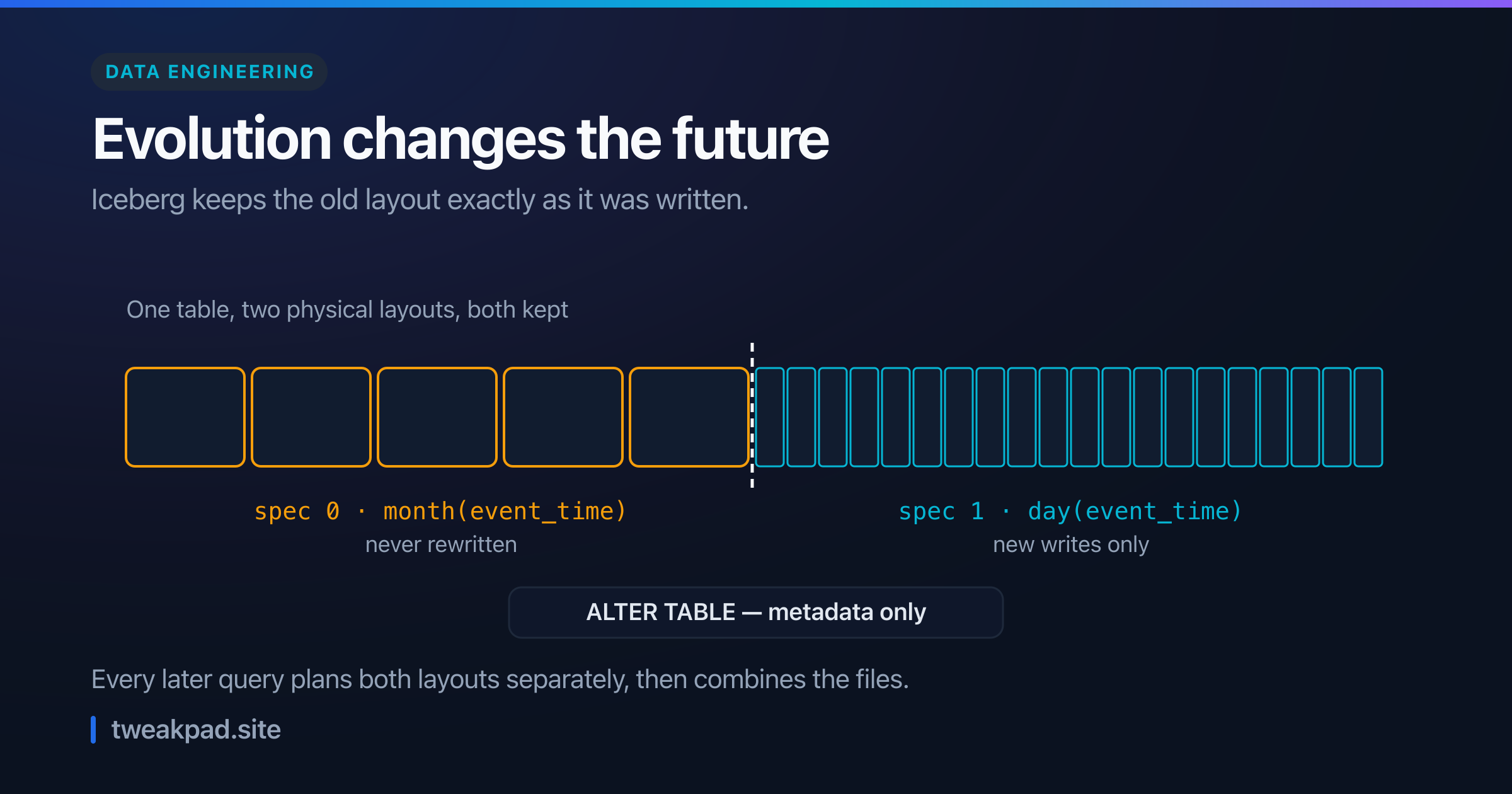
Iceberg Partition Evolution Changes the Future, Not the Past
Partition evolution in Iceberg rewrites nothing. Old data keeps the layout it was written with, and every later query plans both layouts.
The TweakPad Team
 Backend & Databases8 min read
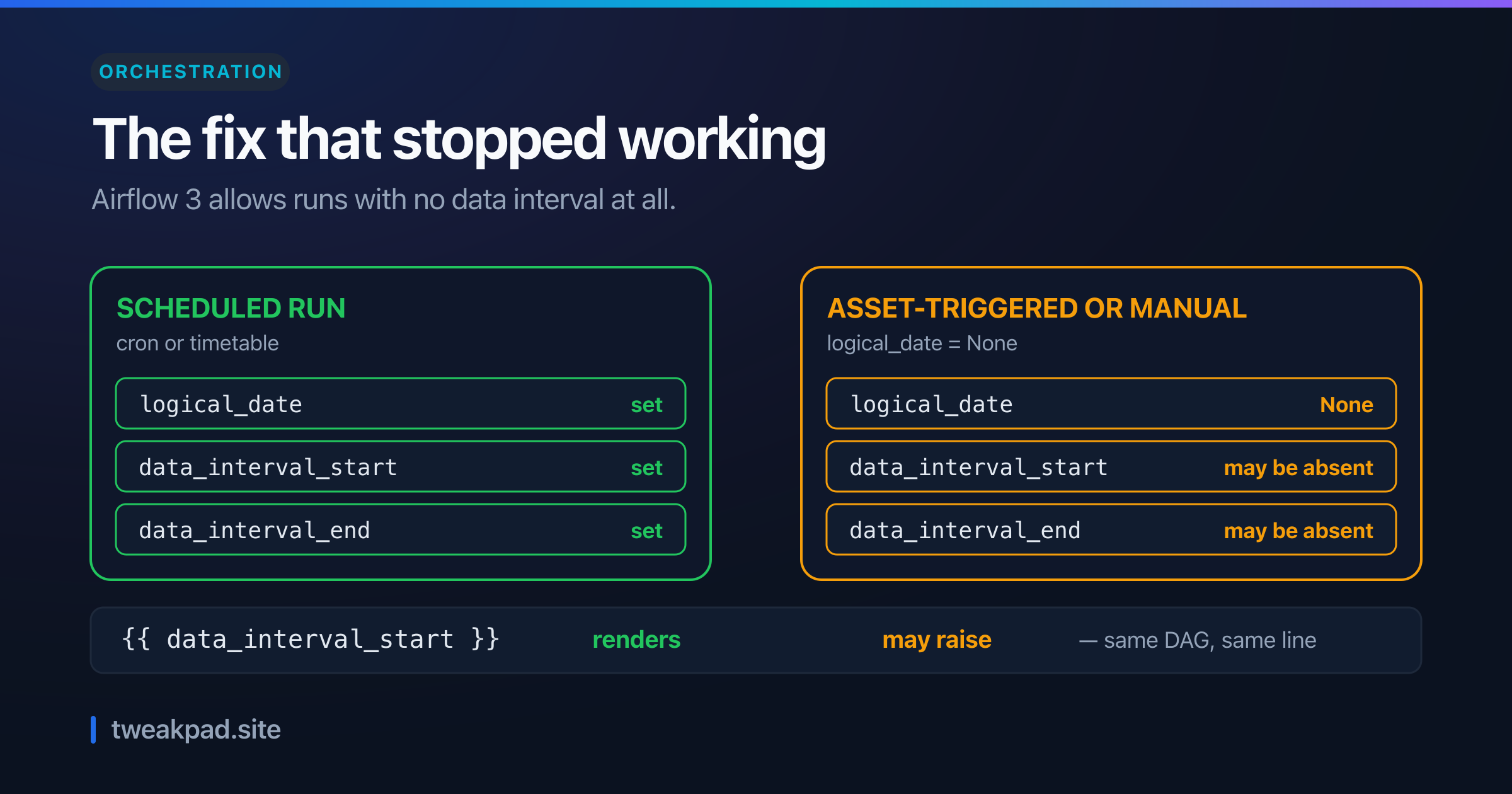
Your Airflow DAG May Not Have a Data Interval Any More
The standard fix for execution_date was to use the data interval. Airflow 3 allows runs without one, so those fields can be missing.
The TweakPad Team
 Backend & Databases8 min read
Semantic Chunking Wins on the Datasets Built to Flatter It
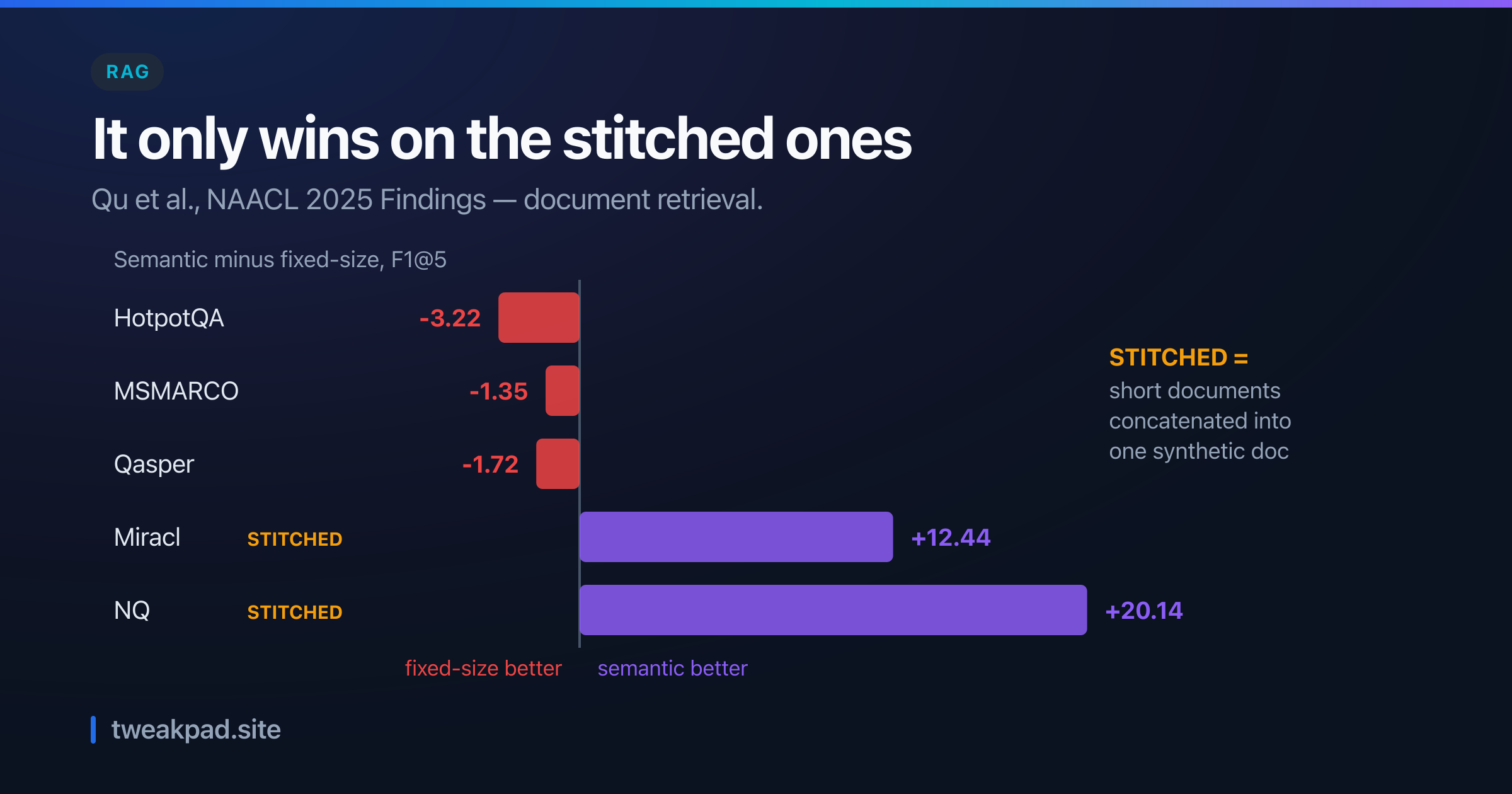
Semantic chunking beat fixed-size only on synthetically stitched documents. On real ones, fixed-size won every document retrieval test.
The TweakPad Team
 Backend & Databases4 min read
QR Phishing Rose 146% in One Quarter. What to Check Before You Scan
A QR code hides its destination by design. How quishing bypasses email filters, and how to inspect a code before it reaches a browser.
The TweakPad Team
 Backend & Databases4 min read
Sunrise 2027 Does Not Kill the UPC. It Puts a URL in the Barcode
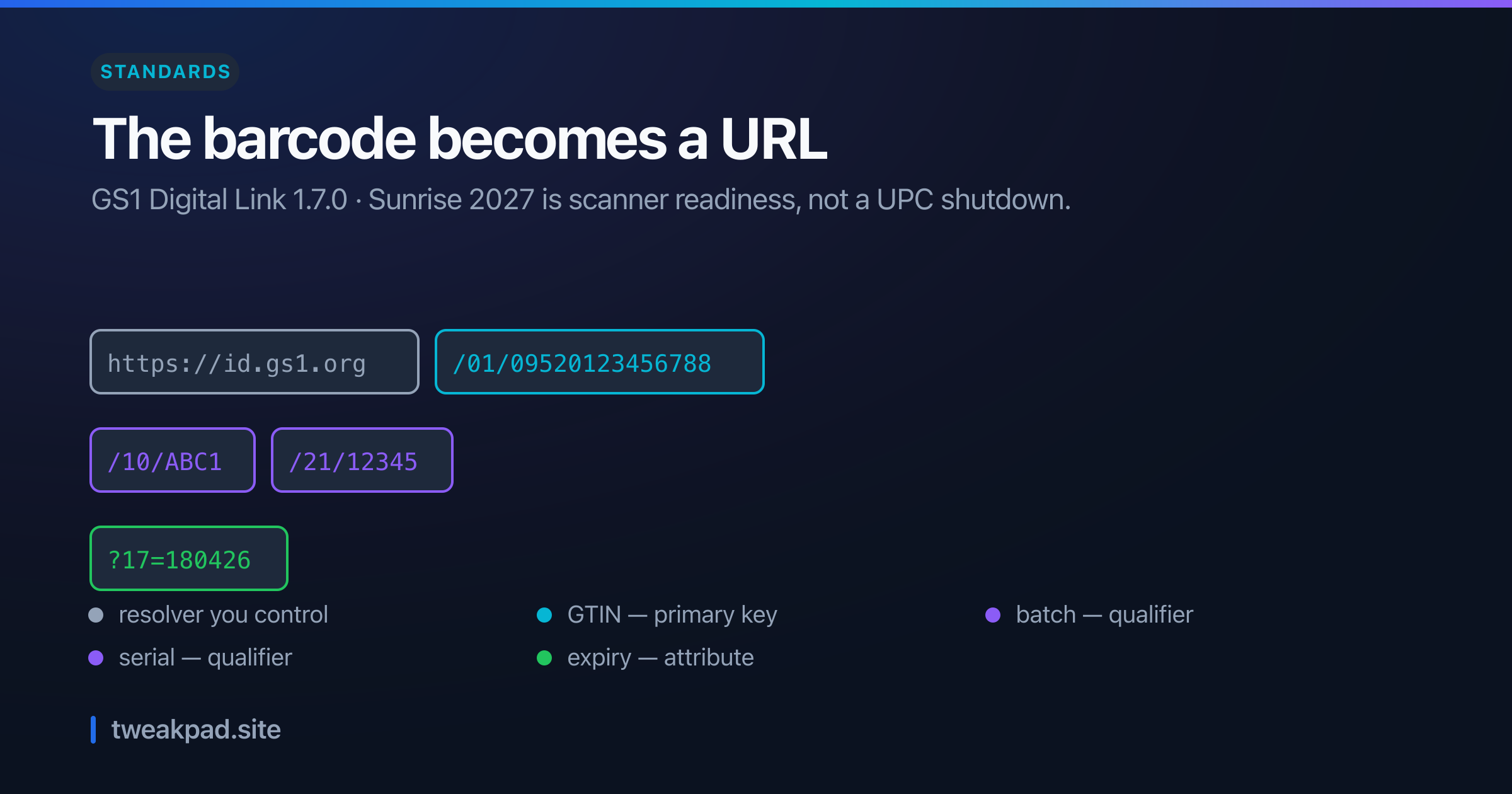
GS1 asks every retail checkout to read 2D codes by 2027. It is a commitment, not a mandate, and the interesting part is Digital Link.
The TweakPad Team
- Backend & Databases5 min read
MongoDB Index Types: Which One Your Query Actually Needs
Single field, compound, multikey, text, wildcard, hashed, geospatial and TTL — what each is for, and the limits.
The TweakPad Team
- Backend & Databases9 min read
Why DAX Says Circular Dependency When Nothing Is Circular
CALCULATE inside a calculated column makes it depend on every column in the table. That is why two harmless columns collide.
The TweakPad Team
- Backend & Databases11 min read
Decoding a JWT Is Not Verifying It
A JWT decoder reads the payload without the key, because the payload is only Base64. What proves a token is real, and what does not.
The TweakPad Team
- Backend & Databases4 min read
How to Create an Index in MongoDB (Without Locking Your Collection)
createIndex syntax, unique and partial and TTL options, building on a live replica set, and how to confirm the index is actually being used.
The TweakPad Team
- Backend & Databases4 min read
The ESR Rule: Getting Compound Index Field Order Right in MongoDB
Equality, Sort, Range — why index field order decides whether MongoDB sorts in memory, and how to prove it with explain.
The TweakPad Team
- Backend & Databases5 min read
UUIDv4 vs UUIDv7 as a Primary Key: What Actually Changes
Random UUID keys fragment your index. UUIDv7 fixes the ordering and keeps client-side generation. When the switch is worth making.
The TweakPad Team
- Backend & Databases5 min read
Why SHA-256 Is the Wrong Way to Hash a Password
SHA-256 is fast, and speed is the attacker advantage. What to use instead, the OWASP parameters, and the bcrypt limit that truncates.
The TweakPad Team
- Backend & Databases5 min read
The Regex That Works Fine Until One Input Hangs Your Server
Catastrophic backtracking turns a working pattern into a CPU bomb. Why nested quantifiers explode, and how to spot and rewrite them.
The TweakPad Team
- Backend & Databases4 min read
Seconds or Milliseconds: The Unix Timestamp Bug Everyone Ships Once
Why a date lands in 1970 or the year 56000, what the 2038 problem actually breaks, and the digit-count check that catches both.
The TweakPad Team
- Backend & Databases4 min read
API Authentication: Sessions, JWTs, API Keys and OAuth Compared
Session cookies, JWTs, API keys and OAuth compared — including why stateless JWTs make logout hard, and what to do about it.
The TweakPad Team
- Backend & Databases2 min read
REST API Design: Decisions You Cannot Change Later
Resource naming, status codes, pagination, versioning and error shapes — focusing on the choices that later break.
The TweakPad Team
- Backend & Databases2 min read
Node.js Streams: Processing Data You Cannot Fit in Memory
Why streams exist, the four types, and how pipeline() fixes the error handling and back-pressure bugs that pipe() leaves you with.
The TweakPad Team
- Backend & Databases2 min read
MongoDB Indexes: What to Create and How to Verify It Worked
Compound index ordering, the ESR rule, covered queries, and how to read explain() output to confirm an index is actually being used.
The TweakPad Team
- Backend & Databases2 min read
MongoDB Schema Design: Embed or Reference?
The embed-versus-reference decision, the 16 MB document limit, and five schema patterns that replace normalisation.
The TweakPad Team
- Backend & Databases2 min read
SQL Query Optimization: Read the Plan Before You Guess
How to diagnose a slow query with EXPLAIN ANALYZE, the index rules that matter, and the eight query patterns that defeat indexes.
The TweakPad Team
- Backend & Databases2 min read
SQL Joins Explained: INNER, LEFT, RIGHT and the One That Bites
What each join returns, why LEFT JOIN plus WHERE silently becomes INNER JOIN, and how row multiplication inflates totals.
The TweakPad Team